
From referrals to systems: what modern advisor marketing requires
Organic growth at wealth firms historically was built on referrals. That era isn't over, but it's eroding — particularly with younger clients who are far more likely to search for an advisor digitally than to ask a friend. A recent panel of marketing, PR and fintech leaders at the 2026 Tiburon CEO Summit explored what it takes to grow in this environment. The Summit’s primary audience is CEOs of wealth firms. Panelists agreed that advisors don’t have the time to dedicate to marketing, and a centralized marketing effort can lead to meaningful growth. The panel, assembled and aptly moderated by Heather Rosato, CMO, DPL Financial Partners, included Alan Clopine, Executive Chairman, Pure Financial Advisors, Marie Swift, CEO, Impact Communications, Karen Barrett, CEO Unbiased, Satayan Mahajan, CEO Datalign Advisory and Eden Ovadia, CEO, Finny.
Here are the themes that emerged.
Intentionality before tactics. The firms seeing the most consistent growth started with clarity: who is the target client, what makes this firm meaningfully different, and why would someone choose to work here over every other option? Many advisors still lead with generic phrases like "comprehensive financial planning" without showing what that actually looks like in a client's life. Case studies, plain language, and specificity outperform credentials and jargon every time.
Education-based channels outperform paid leads — especially at the close. Alan Clopine noted that he invested in marketing from the beginning and built systems around marketing that deliver leads and growth to Pure’s advisors. His experience over two decades showed that radio, adult education classes, and content-driven channels produced clients who were faster to close and more loyal over time. Paid lead generation (like third-party matching services) can work but tends to produce price-sensitive, harder-to-close prospects. The lesson: earn trust first, then use paid channels to fill gaps.
Trust is built through visibility, not claims. Being seen in credible outlets, maintaining consistent messaging across all touchpoints, and letting real client stories do the talking are what build the kind of trust that converts. With AI-generated content flooding the internet, authenticity — real reviews, real advisor personalities, real community — is becoming a genuine differentiator.
Marie Swift encouraged people to lead with earned media. PR can build credibility and trust and is increasingly important given AI and zero-click searches where users’ queries are directly answered, eliminating the need to click on any website links and reducing traffic to company sites. The halo effect of being seen is meaningful, and getting thought leaders out into the digital world is increasingly necessary for being found.
Lead generation is only half the problem. Organizational readiness for conversion is equally important. A firm that generates 100 leads but follows up poorly or inconsistently will damage its brand. The best firms have fast response systems, pre-meeting prep tools, and a deliberate process to get prospects into a real human conversation quickly.
Eden Ovadia shared data on the improvement in conversion when real human connections can be found. Karen Barrett also noted the need to understand where consumers are in the buying process. Many consumers are using digital services to find advisors, but you need to find those who demonstrate high intent.
Most firms are dramatically underinvesting. The panel consensus put the right marketing spend at 7–12% of gross revenue, with a 1 to 3-year horizon before results compound. Most firms are at 2–3% — and even that number is often understated because the true cost of advisor time spent on marketing efforts and relationship-building isn't being counted.
The math on organic growth is compelling: incremental improvements in retention and acquisition have an outsized effect on firm valuation. A 1% increase in organic growth can add 1% to the valuation multiple. Firms with meaningful organic growth are valued higher than those who are growing through M&A or recruitment.
AI is a multiplier, not a replacement. Centralized marketing infrastructure and AI tools can help firms humanize advisors at scale by surfacing their individual niches, communities, and stories through automated but personalized channels. The firms getting this wrong are treating AI as a shortcut past the fundamentals. The ones getting it right are using it to do more of what already works.
Satayan Mahajan highlighted AI tools, including chatbots, that gather more information from leads before connecting them to an advisor. These conversations can match leads to the right advisor sooner and provide meaningful context to improve the human connection and make sure the first conversation focuses on real problems.
Measure everything and find the programs that work for your firm. Alan Clopine said his firm Pure tried many things that didn’t work over the years, but they kept investing in the ones that did. Said Clopine, “Find what works, then rinse repeat.”
Barrett noted it is a lot of work to do a radio or tv show. She suggests first starting with a system to get leads. “You have to be very clear about what leads you want. Try to know as much as you can about those leads tracking data at every step. That data is gold.” Mahajan concurred. “Targeting is table stakes.” Ovadia noted, “The best marketing engines are humanizing at the local level at scale.”
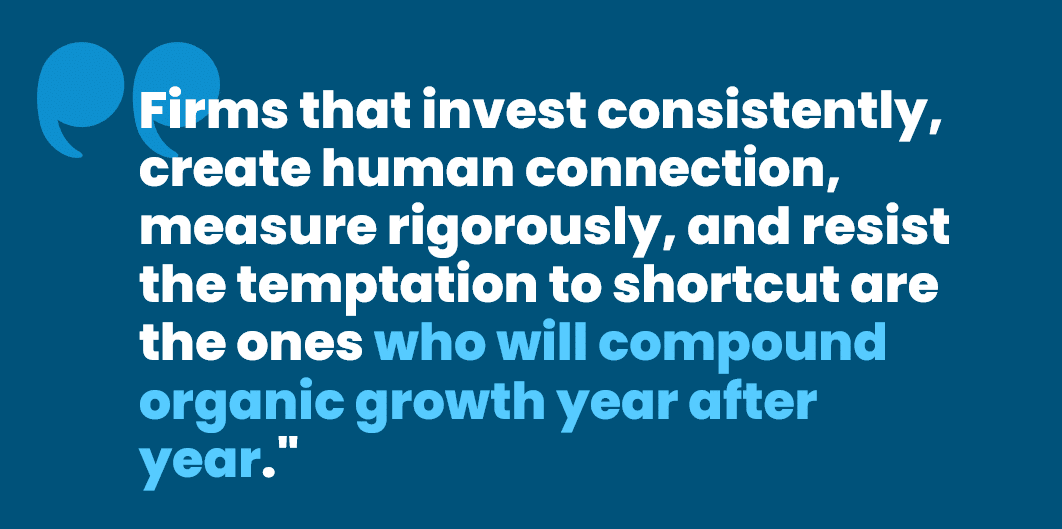
The through line across all five panelists: firms that invest consistently, create human connection, measure rigorously, and resist the temptation to shortcut the fundamentals are the ones who will compound organic growth year over year.
Subscribe.
Receive the latest news and insights from Lowe Group.