
What separates good from great in media training?
Lowe Group has trained hundreds of financial executives to prepare them for live interviews on CNBC or podcasts, in-person interviews with reporters at the Wall Street Journal or Barron’s, or virtual calls with industry publications like Pensions & Investments or Ignites.
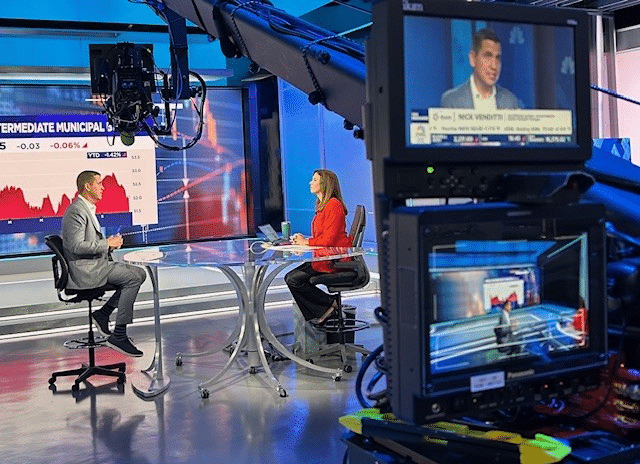
Our training starts with the basics: Who are the media? What are they like and what motivates them? How to craft and deliver a message. We then talk about how to bridge to core messages, how to handle tough questions and offer a few do’s and don’ts. We also put every media training participant on the spot and give them some practice with a live mock interview in front of a camera.
Most participants can become proficient or even good at doing interviews with this training. But the truth is there are a few who prove to be great. We’ve learned that there are a few traits that make the difference between good and great interview subjects, especially for broadcast interviews:
Prepared – The best spokespeople have done their research. They not only know their message, but they’ve researched the outlet and the host or reporter and the likely angle of the interview.
Storytelling – The ability to tell a story in an interesting way including compelling and quotable examples is a key skill for spokespeople. Instead of merely answering a reporter’s questions, the best spokespeople weave a story and bring it to life with concrete and relatable proof points.
Genuine – Great interview subjects project an authenticity and credibility that make audiences trust them. They are believable and not just reciting talking points.
High energy – In an effort to maintain control and not make mistakes, many spokespeople can appear stiff or even low energy. One on-air host told us that guests were much more likely to be low energy than high energy. The best interview subjects get fired up for an interview. They look like they are enjoying themselves and are excited to be there.
Quick thinking – The best spokespeople think on their feet and are able to keep their composure even when confronted with adversarial questions. They pivot quickly to address multiple subjects. Even when stumped by a question, the best interview subjects can effectively bridge to one of their priority message points or figure out a connection to another subject they can address.
Disciplined – A core part of media training is creating a message triangle and learning how to bridge to core message points. The best spokespeople take every opportunity to deliver one of their core messages with every answer. Instead of simply responding to each question the interviewer lobs at them, they have their message triangle on a loop and never find themselves off subject.
Concise – Instead of being long-winded, the best spokespeople are succinct and avoid getting sidetracked down a rabbit hole. Instead of offering extended answers, they tend to pause frequently to allow the host to inject a follow up question.
Tuned in – A critical interview skill is paying attention to the body language and verbal cues from the host to keep the conversation moving. The best spokespeople are good listeners who make the interview feel like a conversation, not a monologue.
Not all of these skills come naturally to everyone right away, but in our experience, they can all be acquired with practice over time. One interesting thing we’ve observed, especially for those pupils for whom they don’t come easily: The second bite at the apple after the mock interview—whether it’s another practice one or the real thing—is always much better than the first go-round.
Subscribe.
Receive the latest news and insights from Lowe Group.