
Private markets meet the wealth channel: What financial marketers need to know
The Financial Communications Society's Chicago chapter picked a timely topic for its summer "Cocktails with Content" gathering last week: the ongoing convergence of public and private markets, and what it means for anyone tasked with marketing these products to investors, advisors, and institutions. Hosted by Morningstar at its Chicago headquarters, the event paired a candid analyst take with a panel of marketing leaders including Pete Papageorgakis, Head of Product and Marketing at Calamos Investments, Kimberly Boone, US CEO at Ptarmigan Media, Kelly Howard, Head of Marketing at Adams Street Partners. The panel was moderated by Nicolette Konkol, SVP, Corporate Marketing at Morningstar.
A skeptic sets the tone
Before the panel began, Morningstar's Brian Moriarty offered a notably measured framing of the category — questioning whether the return relative to cost on many private markets products justifies the complexity and illiquidity investors are being asked to accept. This set up required the panel that followed to respond to the real and current debate about whether this asset class deserves the growing appetite it's getting. The panel, unphased, seemed to think so.
It nicely set up a timely discussion on the tension between genuine product complexity and cost scrutiny on one side and a structural push toward broader access on the other.
What "convergence" actually means
Panelists largely agreed that convergence isn't a marketing buzzword, it's a product structure story. The old private markets wrapper — K-1s, capital calls, structures that only worked for a sliver of a sophisticated allocator's book — is giving way to daily NAV vehicles. That shift is what is opening these strategies to a much broader base of advisors and their clients.
But the panel was careful not to frame this as a simple liquidity win. Private assets are still not liquid assets, and building in "liquidity sleeves" — and being honest with advisors about what those sleeves can and can't absorb — was flagged as a design responsibility, not a marketing footnote.
Two audiences, two kinds of education
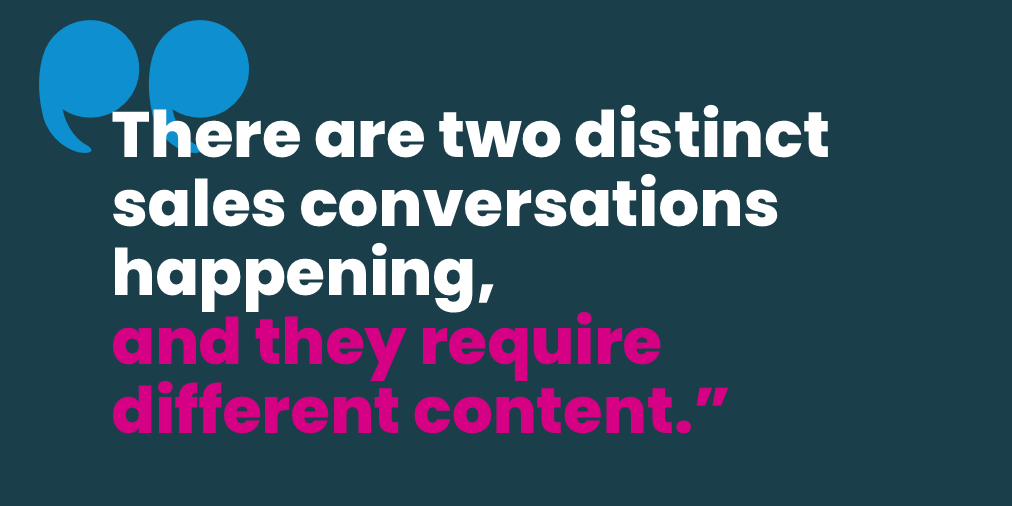
The most useful framework from the discussion was around private markets education: there are two distinct sales conversations happening, and they require different content.
The first is getting a product onto a platform at all — a technical, institutional-grade conversation about structure, fees, and strategy. The second is getting an individual advisor comfortable enough to recommend that product to a client. That conversation needs to be simplified, not dumbed down. The panel noted that advisors' patience for figuring out "why should I care" has compressed significantly compared to five or ten years ago.
Concretely, that means content like:
- Plain-language explainers on fee structures and how leverage affects them
- Due diligence checklists that show advisors exactly what to scrutinize
- Straight talk about what a redemption period actually looks like in practice
The goal, as Calamos’s Papageorgakis put it, is to demystify the product enough that a wholesaler can help an advisor understand it — and an advisor can explain it to a client.
The scale problem institutional marketers don't usually face
Adams Street's Kelly Howard offered a number that reframes the whole channel shift: there are roughly 18,000 RIAs in the U.S., compared to a relatively small and well-known universe of institutional allocators. You can build a relationship-driven, high-touch model for institutions, but you cannot do that at the scale the wealth channel demands. That's forcing firms with institutional roots to build out digital marketing muscle including segmented content and advisor-focused websites, and a real investment in frequency and reach.
Brand still has to be earned separately from performance
One exchange stood out: Kimberly Boone's example of JPMorgan's Guide to the Markets, a resource nearly every advisor read for years — without much of that goodwill translating into actual product usage or brand recognition. It took a deliberate, sustained investment in the brand itself before that flipped, and JPMorgan's tickers became recognizable in their own right. The lesson: thought leadership earns attention, but it doesn't automatically convert to product recall. That's a separate, deliberate build.
Kelly Howard added a corollary from the performance side — strong long-term performance can substitute for some of that brand-building, because it gives advisors a rational basis for confidence even when the product itself is complex or opaque. But not every firm has a multi-decade track record to lean on, which is exactly why the education and brand work matters more for firms still building that history.
The takeaway for financial marketers
The panel's consensus, in effect, answered Brian Moriarty's opening skepticism without dismissing it: these products are complex, the cost and liquidity tradeoffs are real, and investors and advisors deserve marketing that helps them understand that. The firms getting this right aren't leading with the pitch — they're leading with the explainer, the due diligence checklist, the honest conversation about liquidity, and letting the product conversation follow once trust is established.
For asset managers navigating this convergence, that's not just a content calendar problem. It's a positioning and communications strategy problem — one that requires genuinely different messaging architectures for institutional buyers and individual advisors, built on the same underlying product story.
Subscribe.
Receive the latest news and insights from Lowe Group.